


Khalid Sharara started as an Associate Consultant in Customer Success and now leads Apps, Data, and AI at Appian. Read about his journey to leadership and the power of embracing opportunities. Learn how he navigated career growth, confronted discomfort, and cultivated the art of owning his impact.
How has your role evolved at Appian since the early days?
I’ll start by saying this has been an incredible ride! I joined straight out of college, and in nine years I’ve grown through eight roles across three departments, from an Associate to a Senior Director. I’d sum it up in two major transformations.
1. Customer Success → Technical Support. I joined as an Associate Consultant in Customer success. “Benched” and waiting for a project, I volunteered for a six-month Technical Support rotation and, four months in, made it permanent. I went from fixing individual tickets to building a cloud-support operation managing thousands of servers, helping scale our global team from 20 to 100 engineers, and always staying hands-on to keep every improvement grounded in reality.
2. Technical Support → Business Technology (Apps, Data & AI). Once Support matured, I took a risk and pivoted my career to Business Technology – a new domain to me where I’ve learned to ship custom apps that power our entire company. That risk has paid off and today, I’m expanding Appian’s internal Data and AI function, turning raw data into insights and incorporating AI into our business to fuel the next wave of operational excellence.
It’s been a thrilling ride and none of it would’ve happened without Appian’s trust and appetite for innovation!
Can you share a time when you were outside your comfort zone and how did you grow through it?
Most of my career has been outside of my comfort zone. I’ll share two examples.
1. Tackling public speaking. Early on, the thought of presenting made my knees shake. I hated that feeling and to conquer it I did something counterintuitive; In my first performance review I told my manager I’d accept every speaking invitation, no matter how big or small. Each opportunity (demos, brown-bags, panels) pushed me past the nerves. That early exposure helped me develop the skill and grow more confident by deliberately leaning into discomfort.
2. Turning impostor syndrome into structural change. As a new support engineer I often felt inadequate. Colleagues seemed to solve cases faster and know the platform better. A few candid conversations revealed we all felt somewhat inadequate and our real gap was structural: limited training, thin documentation, and a domain too broad for any one person to fully grasp. I saw this as an opportunity to rethink how the team was organized – should we specialize? That realization became a turning point. I proposed changes including a new organizational structure and eventually stepped into management to scale the improvements globally. That experience taught me two things: discomfort is sometimes systemic, not personal, and at Appian good ideas trump tenure; I pursued this transformation less than 18 months into my career.
What does “owning your impact” look like in your role today compared to when you started?
Early on, impact meant resolving one support ticket at a time; value was measured case-by-case, customer-by-customer. Today, as a people leader, impact scales through others. My job is to create the conditions for my team to excel, then celebrate their wins and shoulder their setbacks. When we succeed, I celebrate. When we fail, I don’t deflect or blame; I diagnose, coach, and help the team improve together. In short, I now “own my impact” by taking full responsibility for both the outcomes we achieve and the growth that gets us there. It's about fully owning the success and failure of my entire team.
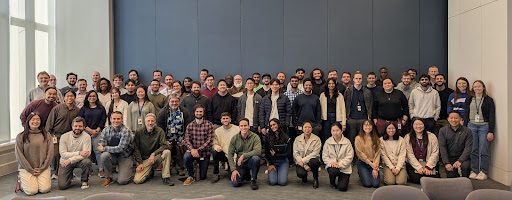 Khalid (in the center of the front row) with the CIO department.
Appian is known for empowering people early in their careers. How did that empowerment show up for you?
Being taken seriously, trusted with real responsibility and judged on the strength of the plan that I put together and not necessarily the number of years that I had worked. To me that was empowerment. Having my ideas seriously considered despite my tenure.
What advice do you give to junior employees who hope to grow into leadership here?
1. Be a relentless problem-solver. Tackle progressively harder challenges and keep asking: “What can I personally do to help solve this?” You’ll build a reputation as someone who gets things done. People will start seeing you as reliable and capable. Warning! Success snowballs, so expect ever-bigger problems to roll your way; that reputation is exactly what opens doors to new opportunities.
2. Think of yourself as a startup. Secure “investors” by earning the confidence of your leaders, build strong partnerships with peers, and create clear value for your customers (internal or external). Then, market your capabilities: showcase metrics, stories, and wins so stakeholders see exactly how you move the needle. Apply the same startup mentality to amplify the impact of every team you lead.
3. Increase your resilience. Bigger roles bring more pressure. At one point stress was my limiting factor so I focused on building a stress management routine: consistent exercise, clean eating, good sleep, and meditation. These habits expanded my capacity to lead and helped me grow into the next level.
What do you know now that you wish you knew back then?
1. Expect delays and detours. Growth isn’t linear. Sometimes you have to slow down to find another path. I remember after solving my first big problem, I expected to immediately tackle another bigger problem. But there was a waiting period, and it made me anxious – did I just solve a problem I can never top? Over time, I learned that these lulls are natural and that not every moment will be bigger than the one before it.
2. Stay patient and visible. Growth takes time, but being patient isn’t enough, you also need to stay visible. Make sure others see your work and impact. When you do, the right opportunities will come.
What’s next for you – what are you excited to build, lead, or learn going forward?
I’m spearheading our AI practice within Business Technology, searching for creative ways to embed AI to unlock scale across the company. In parallel, I’m ramping up on our internal data practice by immersing myself in books, courses, and hands-on projects to build up my technical foundation in a discipline that’s entirely new to me. One of my favorite things about Appian is that learning never stops!
If you’re interested in growing your career at Appian, apply for an open role.